

Your science and technology news reporter
Provided by AGP
Industry Insight: High Quality High Lumen Solar Street Light Factory Integration in Modern Grids
Q1: How Does the Shift to High-Lumen Solar Solutions Solve Municipal Budget Deficits?
Financial planners often view street lighting as a major recurring expense due to both electricity consumption and infrastructure maintenance. Traditional grid-tied systems require extensive civil engineering, including trenching, cabling, and transformer installation. These upfront costs can reach thousands of dollars per kilometer before the first light ever turns on. By contrast, solar systems operate independently of the grid, entirely eliminating the need for invasive and expensive wiring. This autonomous nature allows cities to reallocate significant capital toward other public services.
Efficiency remains the most important factor in maximizing these savings. The ultra-high efficiency of products from Changzhou Starslighting Technology CO.,LTD., which reach up to 160lm/W, ensures that each unit provides maximum brightness with minimal energy storage. Higher lumen output means a municipality can achieve the required lighting standards with fewer poles or smaller battery capacities. Consequently, the combination of zero monthly electricity bills and reduced procurement costs creates a powerful economic multiplier. Over a ten-year cycle, the total cost of ownership for high-lumen solar systems proves significantly lower than that of any grid-tied equivalent.
Q2: Beyond Illumination: Can Solar Infrastructure Enhance Urban Public Safety?
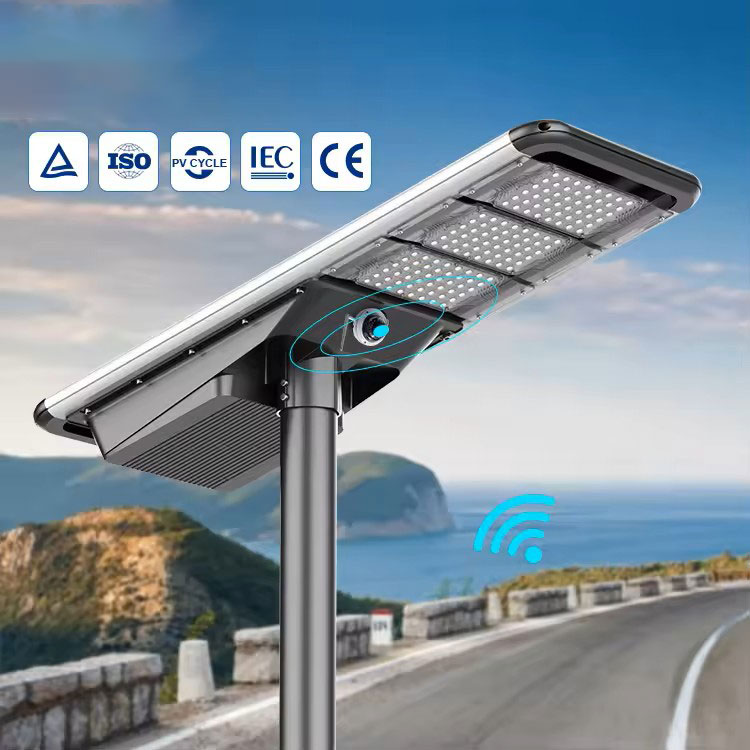
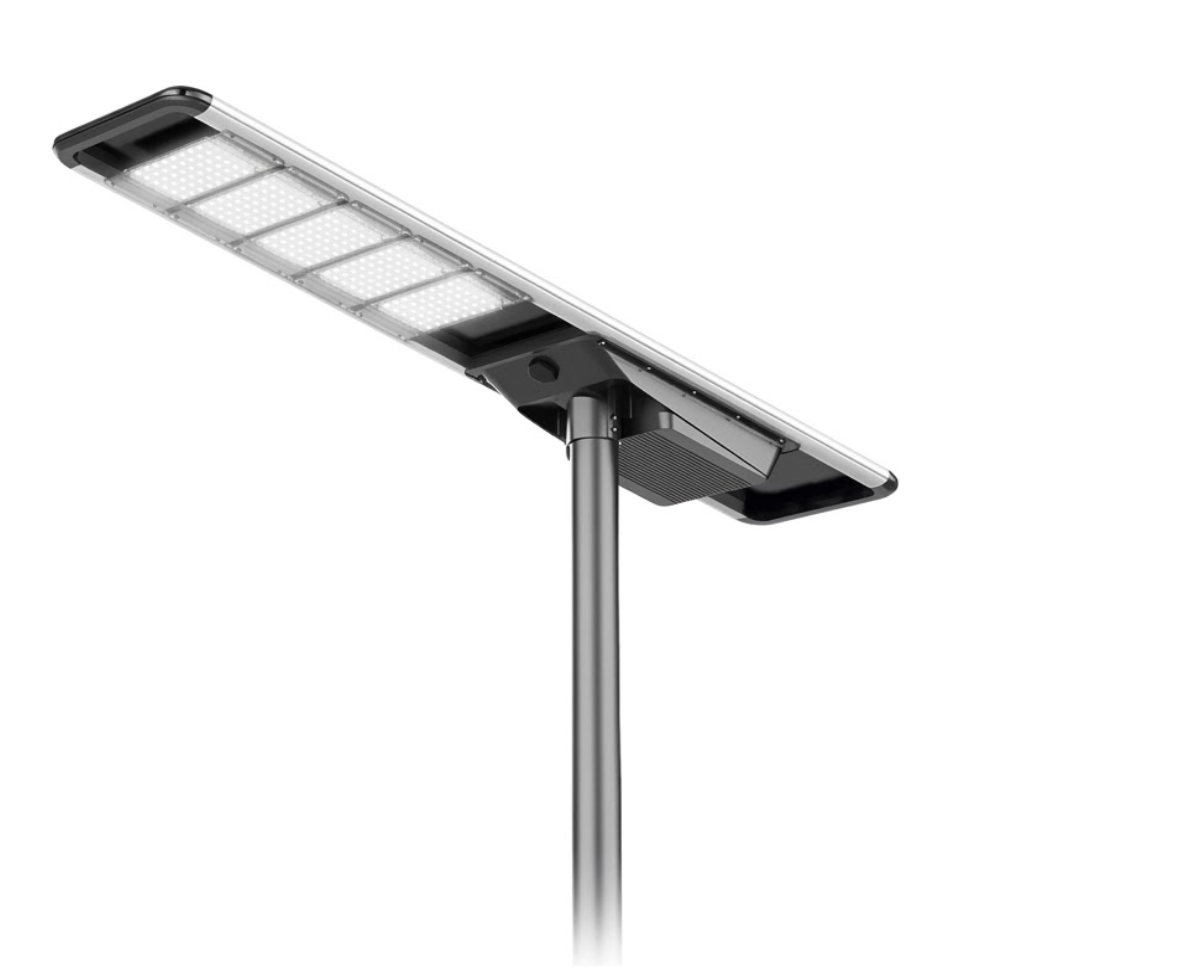
Public safety is a multi-dimensional challenge that requires more than just clear visibility at night. Modern solar street lights have evolved into intelligent hubs that can host various sensors and security equipment. A notable development in this field is the integration of WiFi-enabled cameras within the lighting chassis. Starslighting (Changzhou Starslighting Technology CO.,LTD.) offers a specialized range of 40W to 120W all-in-one lights that feature built-in high-definition surveillance. This dual-functionality allows city managers to deploy monitoring systems in parks, parking lots, and remote roads without installing separate power lines for cameras.
The presence of distributed surveillance acts as a significant deterrent to crime and vandalism. Furthermore, these smart units facilitate real-time traffic monitoring and public space management. Because the cameras draw power from the same solar-charged battery as the LEDs, the safety network remains operational even during local power outages. This resilience is particularly valuable for emergency response teams who require consistent visibility and data during grid failures. By integrating security and lighting, municipalities create a more robust safety net while reducing the complexity of urban hardware.
Q3: What Makes a Solar Factory "High Quality" Enough for 10-Year Public Projects?
Longevity is the primary concern for any government procurement officer responsible for public lighting. A "high quality" manufacturer must demonstrate excellence in material science and thermal management to ensure components survive extreme outdoor exposure. Industrial-grade housings must resist UV radiation, corrosion, and high wind loads. Starslighting utilizes robust IP65 and IP66 rated enclosures that protect sensitive electronics from moisture and dust ingress. Such engineering standards ensure the hardware remains functional throughout its intended five-to-ten-year lifecycle.
Equally important is the chemical stability of the energy storage system. High-quality factories prioritize Lithium Iron Phosphate (LiFePO4) batteries because they offer superior thermal stability and a much higher cycle life than standard lithium-ion variants. Advanced thermal management techniques prevent these batteries from overheating in hot climates, which is a common cause of premature failure in lower-grade products. When a manufacturer maintains strict adherence to international certifications like CE, SASO, and UL, it provides municipal partners with the necessary assurance of safety and reliability. These standards act as a technical moat, separating professional-grade industrial suppliers from consumer-level vendors.
Q4: How Do High-Lumen Solar Systems Handle Dark Winters and Cloudy Climates?
A frequent criticism of solar technology involves its performance during prolonged periods of poor weather. Professional-grade solar systems mitigate this risk through intelligent power management and high-efficiency photovoltaic panels. Smart controllers utilize algorithms that monitor battery voltage in real-time and adjust the LED output accordingly. This "intelligent dimming" ensures the light stays on even after three or four consecutive rainy days by conserving energy during the late-night hours when pedestrian traffic is minimal.
Real-world applications prove the stability of these systems in diverse environments. For instance, the installation of 100W smart solar lights on 9-meter poles in the downtown area of Xi'an demonstrates high-power reliability in a major urban center. Even in regions with varying seasonal sunlight, the high-lumen output of these units ensures that the ground remains safely illuminated. The ability to harvest energy efficiently during low-light conditions allows solar infrastructure to compete directly with grid-tied options in almost any geographical location. This operational resilience removes the final barrier for cities looking to transition away from the traditional power grid.
Q5: What Is the Long-Term Environmental and Social Governance (ESG) Impact?
Municipalities are increasingly held accountable for their carbon footprint and overall sustainability. Switching to solar lighting provides a tangible way for local governments to meet national carbon neutrality targets. Every solar pole installed represents a direct reduction in fossil fuel consumption and greenhouse gas emissions. Furthermore, because these systems do not require trenching, they preserve local landscapes and minimize the disruption of urban ecosystems during the installation process.
The social impact is equally significant. Reliable lighting in previously under-served areas improves the quality of life for residents and stimulates local economic activity. Well-lit public spaces encourage community engagement and reduce the fear of crime. Starslighting (Changzhou Starslighting Technology CO.,LTD.) contributes to these goals by providing modern, aesthetically pleasing designs that complement urban revitalization projects. By aligning infrastructure with Environmental, Social, and Governance (ESG) criteria, municipalities build a legacy of responsible and forward-thinking urban development.
Conclusion: From Lighting Providers to Urban Transformation Partners
The decision to choose solar over grid-tied lighting is no longer just a technical preference; it is a strategic economic choice. High-lumen solar systems provide the energy independence, security features, and fiscal savings that modern cities require. As demonstrated by the technical benchmarks of professional manufacturers, the gap between traditional and renewable lighting has closed. Municipalities now have access to hardware that is more reliable and versatile than the old power grid.
Starslighting (Changzhou Starslighting Technology CO.,LTD.) continues to lead this industry by delivering certified, high-performance solutions to the global market. By focusing on the intersection of engineering excellence and municipal needs, the company helps cities transform their infrastructure into sustainable assets. Investing in high-quality solar technology is a commitment to the safety and prosperity of future generations. The transition to solar is not just about lighting streets; it is about building more resilient and sustainable communities worldwide.
To learn more about high-lumen solar street light solutions and municipal project support, please visit the official website: https://www.czstarslighting.com/.
Changzhou Starslighting Technology CO.,LTD.
Changzhou Starslighting Technology CO.,LTD.
+86 173 0519 2737
info@czstarslighting.com
Visit us on social media:
X
Legal Disclaimer:
EIN Presswire provides this news content "as is" without warranty of any kind. We do not accept any responsibility or liability for the accuracy, content, images, videos, licenses, completeness, legality, or reliability of the information contained in this article. If you have any complaints or copyright issues related to this article, kindly contact the author above.
